Baby Formula Makers vs. Manual Prep: Are They Worth It? | Goo'Ga
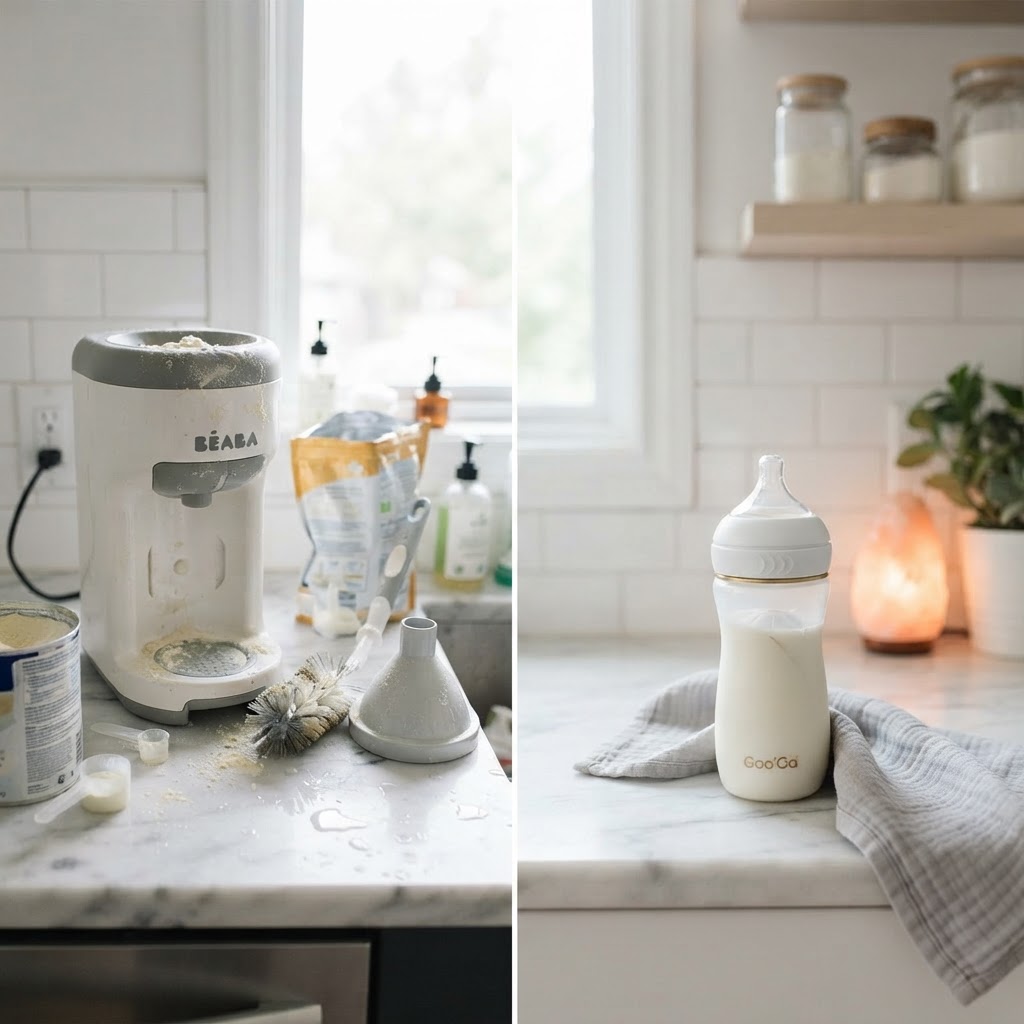
Table of Contents
- Introduction: The exhausting quest for the fastest baby bottle
- What is a baby formula maker? (How dispenser machines actually work)
- The Pros of Formula Machines: Speed, convenience, and nighttime sanity
- The Cons: Ratio anxiety, constant funnel cleaning, and hidden mold risks
- The Pitcher Method: A popular and cost-effective manual alternative
- The Best of Both Worlds: How Goo'Ga's twist-to-mix bottle provides instant, 100% accurate prep without the machine
- Frequently Asked Questions
- Conclusion: Which formula prep method is right for your family?
Introduction: The exhausting quest for the fastest baby bottle
It is 3:00 AM. Your baby is wailing in the next room with a hunger cry that rattles your sleep-deprived brain. You stumble into the kitchen, blinded by the overhead lights, and begin the familiar, exhausting ritual. You fumble with the plastic scoop, inevitably spilling expensive powder onto the countertop. You struggle to read the meniscus on the bottle to ensure you have exactly four ounces of water. Then comes the aggressive shaking, hoping you eliminate the hidden clumps, followed by the agonizing wait for the bottle warmer to chime while your baby’s cries reach a fever pitch. Every parent who has bottle-fed an infant knows this exhausting quest for the fastest baby bottle. This exact scenario—repeated six to eight times a day—is why the modern baby formula maker was invented.
Automation promises to solve the midnight struggle. Manufacturers claim these countertop gadgets can deliver a perfectly warmed, perfectly mixed bottle in seconds. But before you clear counter space and spend hundreds of dollars on one of these luxury appliances, you need to hear the unvarnished truth. Are formula makers worth it? Or do they simply trade one set of headaches for another?
Parents across parenting forums and social media are deeply divided on the issue. Some view automated dispensers as the single greatest invention for modern parenting, crediting the machine with saving their sanity during the newborn phase. Others deeply regret their purchase, citing a laundry list of stressful maintenance requirements and alarming safety concerns. If you are researching how to make baby formula faster, you need to understand exactly what you are bringing into your kitchen. We are going to explore the pros, the cons, the popular manual workarounds, and the innovative new alternatives that might just give you the best of both worlds.
Table of Contents
- Introduction: The exhausting quest for the fastest baby bottle
- What is a baby formula maker? (How dispenser machines actually work)
- The Pros of Formula Machines: Speed, convenience, and nighttime sanity
- The Cons: Ratio anxiety, constant funnel cleaning, and hidden mold risks
- The Pitcher Method: A popular and cost-effective manual alternative
- The Best of Both Worlds: How Goo'Ga's twist-to-mix bottle provides instant, 100% accurate prep without the machine
- Frequently Asked Questions
- Conclusion: Which formula prep method is right for your family?
What is a baby formula maker? (How dispenser machines actually work)
To understand the fierce debate surrounding these devices, you first need to understand the mechanics. A baby formula maker is essentially a specialized coffee machine designed exclusively for infants. Instead of coffee grounds, you fill a top hopper with your baby’s dry formula powder. Instead of brewing coffee, a water reservoir heats purified water to a specific, baby-safe temperature.
When you press the start button, a mechanized wheel inside the powder hopper turns, dropping a predetermined amount of formula into a plastic dispensing funnel. Simultaneously, the machine dispenses the heated water into the same funnel. The powder and water mix together as they flow down through the funnel and directly into your waiting baby bottle. The entire process takes anywhere from 15 to 30 seconds, depending on the volume of the bottle you are making.
The core appeal of a formula dispenser machine is the complete elimination of manual labor. Mixing baby formula the traditional way requires measuring scoops, warming water, and vigorous shaking. A machine digitizes this process. You input the specific brand and type of formula you are using into the machine's settings. The manufacturer provides a corresponding setting number, which tells the machine exactly how much powder to drop to achieve the correct ratio for that specific brand's density and scoop size.
While the concept is incredibly straightforward, the execution is highly complex. Formula powder is notoriously sensitive to humidity, and infant digestion is highly sensitive to incorrect water-to-powder ratios. The machine must flawlessly execute this chemical mixing process multiple times a day, every single day, without fail. As we will explore, this high-stakes mechanical expectation is exactly where the pros and cons of baby formula machines begin to violently clash.
The Pros of Formula Machines: Speed, convenience, and nighttime sanity
There is a reason these machines frequently top baby registry lists and receive glowing recommendations from exhausted new parents. When a baby formula maker works exactly as intended, it feels like actual magic. The benefits are tangible, immediate, and deeply impactful for a sleep-deprived family.
Unmatched Speed for Hungry Babies
Infants lack patience. When a newborn wakes up hungry, they go from zero to absolute panic in a matter of seconds. Traditional bottle preparation takes time. You have to measure the water, carefully level the scoops of powder, shake the bottle vigorously to remove clumps, and then warm the bottle. Even with practice, this process takes several minutes. A formula dispenser machine cuts that time down to roughly 15 seconds. You place the bottle on the tray, hit a button, and immediately have a fully prepared meal. For parents dealing with babies who suffer from colic or intense hunger cues, those saved minutes are invaluable.
Perfect Temperature Control Every Single Time
One of the most frustrating aspects of manual prep is nailing the temperature. If you use a traditional bottle warmer, you risk overheating the milk, which destroys vital nutrients in the formula and creates a severe burn hazard for your baby's mouth. If you under-heat it, a picky baby might flat-out refuse to drink. Dispenser machines maintain a reservoir of water at the exact optimal temperature—usually offering settings for room temperature, body temperature, or slightly warmer. The machine eliminates the dangerous guessing game of temperature control entirely.
The Ultimate Nighttime Sanity Saver
Nighttime feedings are brutal on parental mental health. Waking up from a deep sleep cycle impairs your cognitive function, making it surprisingly difficult to count small scoops of powder. Did you put in three scoops or four? If you lose count, you have to dump the entire bottle and start over, wasting expensive formula. The automated machine allows for one-handed, brain-free operation. You do not need to turn on the bright kitchen lights. You do not need to count scoops. You can hold your crying baby in one arm, press a button with your free hand, and return to the nursery in under a minute. This specific benefit is why many parents swear by their machines, claiming they are essential for preserving nighttime sanity.
The Cons: Ratio anxiety, constant funnel cleaning, and hidden mold risks
Despite the glossy marketing and the undeniable appeal of instant bottles, parent forums are filled with warnings. If you dig into Reddit communities like r/FormulaFeeders, you will quickly discover that these machines require an astonishing amount of upkeep. The problems with baby formula dispenser machines are significant, and they center around three major pain points: mechanical accuracy, relentless cleaning, and unseen health hazards.
The Dreaded Ratio Anxiety
This is the single most common and terrifying complaint among parents who use automated dispensers. Infant formula must be mixed at precise ratios. If formula is too concentrated (too much powder), it can cause severe constipation and kidney strain. If it is too diluted (too much water), the baby is deprived of essential calories and nutrients, which can lead to weight loss, malnutrition, and even a dangerous condition called water intoxication.
Because the powder drops through a dark chute into the funnel, you cannot actually see how much powder is going into the bottle. Parents call this "ratio anxiety"—the constant, nagging fear that the machine is dispensing watery formula. This fear is not unfounded. Because formula powder is sticky, it frequently clumps up around the dispensing wheel. If a clump blocks the opening, the machine will dispense mostly water.
To combat this, parents frequently resort to the "plastic wrap test." They cover the funnel with plastic wrap, run a cycle to catch the dry powder, and weigh it on a digital kitchen scale to ensure the machine is dispensing the correct gram amount. If you are buying a luxury machine to save time, having to routinely audit its mechanical accuracy with a digital scale completely defeats the purpose.
The Relentless Funnel Cleaning Schedule
If you think buying a machine means you never have to clean up a formula mess again, you are in for a rude awakening. Formula powder combined with steam from the heated water creates a sticky, cement-like residue inside the dispensing funnel. To prevent this residue from blocking the powder chute and ruining the ratio, machines have a hardcoded safety feature: the machine will lock you out and refuse to make a bottle until you clean the funnel.
For the most popular models on the market, this lockout happens every four bottles. Imagine this: it is 4:00 AM, your baby is screaming, you press the magic button, and instead of a bottle, you get a blinking red "CLEAN FUNNEL" light. You must remove the funnel, wash it with soap, and completely dry it (because any moisture will instantly cause the powder to clump) before the machine will operate.
Many parents end up buying three or four spare funnels just so they can swap them out in the middle of the night and wash the dirty ones later. The constant cycle of washing, drying, and swapping funnels is a massive source of parental frustration.
Hidden Mold Risks in the Water Tank
Safety is a non-negotiable priority for parents. So, is a baby formula maker safe? Mechanically, yes, but hygienically, it requires extreme vigilance. These machines hold standing water in a dark, warm internal reservoir. This environment is the exact breeding ground for black mold and bacteria.
While the external water tank is easy enough to wash, the internal tubing that carries the heated water to the funnel is impossible to reach with a brush. If you do not religiously follow the manufacturer's descaling instructions—which usually involve running vinegar through the machine and flushing it with gallons of clean water—mold can quietly grow inside the unseeable internal components. Discovering black flakes in your baby's freshly made bottle is a horror story frequently shared on parenting forums, prompting many parents to unplug their machines for good.
The Pitcher Method: A popular and cost-effective manual alternative
Because of ratio anxiety and funnel cleaning exhaustion, a massive portion of the formula-feeding community abandons automated machines entirely. Instead, they turn to a highly reliable, incredibly cost-effective manual strategy known as the pitcher method.
What is the Pitcher Method?
The concept is incredibly simple. Instead of mixing individual bottles on demand throughout the day, you mix an entire 24-hour supply of formula all at once. You use a specialized formula mixing pitcher—which usually holds up to 36 ounces and features a built-in mechanical mixing wand.
You calculate exactly how much your baby eats in a day. You pour the corresponding amount of purified water into the pitcher, dump in the exact number of formula scoops required for that total volume, and pump the handle to mix the batch. You then store the sealed pitcher in the refrigerator. When your baby is hungry, you simply pour the cold formula directly into a bottle and warm it up.
Why Parents Love the Pitcher Method
The pitcher method formula strategy solves almost all the major anxieties associated with automated machines.
1. Guaranteed Accuracy: Because you are manually measuring the water and the powder for a large batch, the ratio is 100% accurate every single time. There is no hidden dispensing wheel, no clumping issues, and zero ratio anxiety. You know exactly what your baby is eating.
2. Reduced Gas and Colic: Freshly shaken formula is full of tiny air bubbles. If a baby swallows those bubbles, they experience painful gas. Because pitcher method formula sits in the refrigerator for hours before serving, all the air bubbles naturally dissipate. The result is perfectly smooth milk that is incredibly gentle on sensitive newborn stomachs.
3. Zero Maintenance Stress: Cleaning a single mixing pitcher once a day is infinitely easier than washing a machine funnel every four bottles and descaling internal tubing. There are no hidden mold risks.
The Drawbacks of the Pitcher Method
While reliable, the pitcher method is not perfect. The biggest drawback is the reheating time. Because the formula is stored in the refrigerator, it is ice cold. While some babies will happily drink cold milk, most prefer it warm. Waiting five to seven minutes for a bottle warmer to heat chilled milk back up to body temperature can feel like an eternity when a hungry baby is screaming.
Furthermore, the pitcher method is completely useless if you leave the house. You cannot lug a giant pitcher of perishable milk to the grocery store or a restaurant. It lacks the on-the-go convenience that modern parents desperately need.
The Best of Both Worlds: How Goo'Ga's twist-to-mix bottle provides instant, 100% accurate prep without the machine
Parents are caught in a frustrating dilemma. They want the instant, mess-free speed of an automated machine, but they demand the 100% accurate, anxiety-free safety of manual preparation. They need a system that works just as well in a dark nursery at 3 AM as it does in the back seat of a car during a road trip.
If you are searching for a baby brezza alternative that actually makes life easier without the hidden maintenance traps, the innovation you are looking for lies in the bottle itself, not in a countertop appliance.
Enter Goo'Ga's twist-to-mix bottle.
This revolutionary system fundamentally changes how parents handle formula feeding by eliminating the need for a separate preparation device. The Goo'Ga bottle acts as an all-in-one portable baby formula dispenser and feeding vessel. It features an ingenious dual-chamber design. The bottom chamber holds the exact amount of purified water your baby needs. The top, airtight compartment holds your pre-measured formula powder.
During the day—when you have the time and energy—you can pre-load several Goo'Ga bottles. You measure the powder yourself, ensuring the ratio is perfectly accurate. You measure the water yourself. Because the water and powder remain completely separated by a secure seal, the powder stays completely dry and fresh.
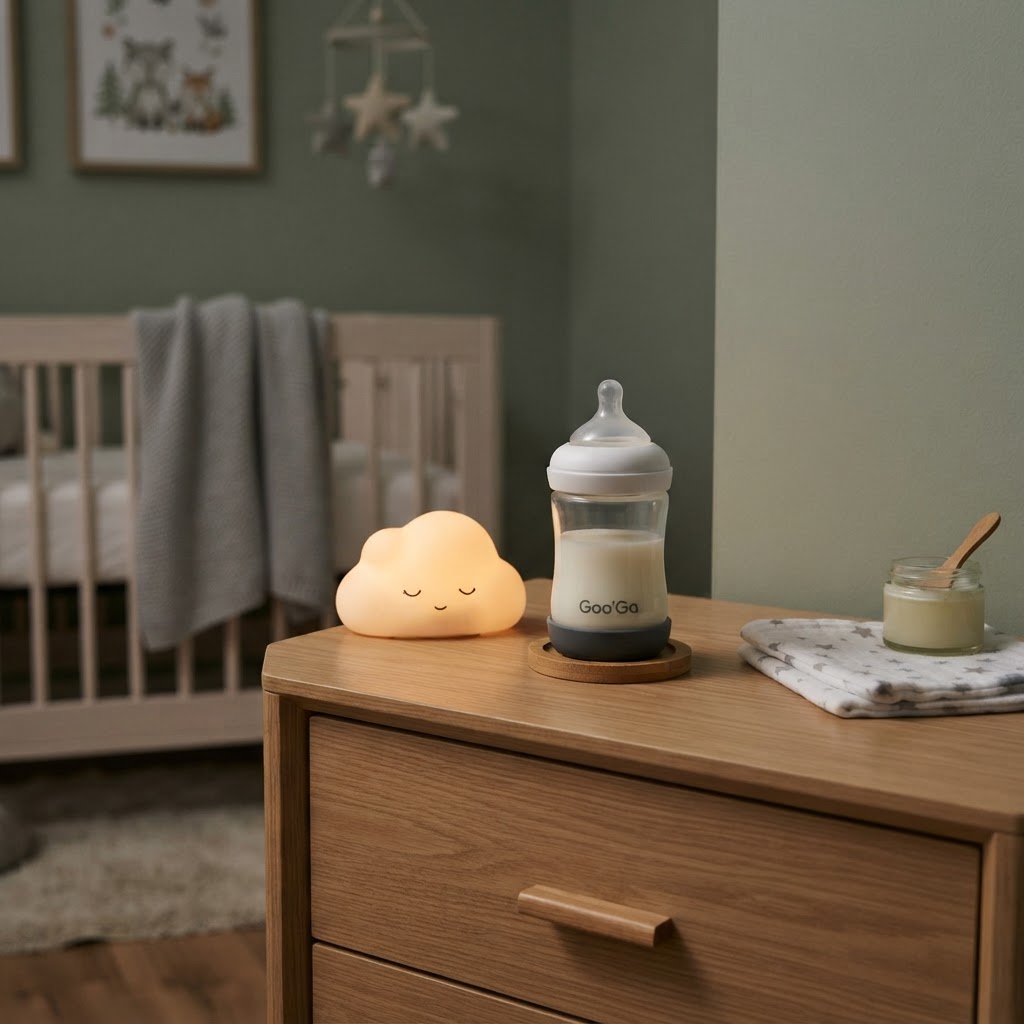
When your baby wakes up hungry, the magic happens. You do not need to walk to the kitchen. You do not need to wait for a machine to heat up. You do not need to find a funnel. You simply grab the pre-loaded Goo'Ga bottle from your nightstand, twist the collar to release the powder into the water, give it a quick shake, and feed your baby instantly.
This simple twist-to-mix mechanism solves every single problem associated with formula machines.
No Ratio Anxiety: You measured the powder yourself. You know with 100% certainty that your baby is getting the exact nutritional density they require. There are no hidden clumps blocking a sensor.
No Mold or Funnel Cleaning: There are no hidden internal tubes or water tanks to harbor black mold. The entire bottle comes apart and goes directly into the dishwasher or sterilizer. You never have to worry about waking up to a blinking red maintenance light.
Total Portability: A countertop machine is permanently stuck in your kitchen. Goo'Ga bottles are the ultimate portable baby formula dispenser. You can toss a pre-loaded bottle into your diaper bag, take it on an airplane, or leave it with a babysitter. Whenever the baby is hungry, you just twist, mix, and serve.
By taking the mechanics out of the machine and putting them directly into the bottle, Goo'Ga gives parents the speed they crave without the stress they dread.
Frequently Asked Questions
Q: Are baby formula makers safe to use? A: Yes, formula makers are generally safe if cleaned meticulously according to the manufacturer's strict instructions. However, parents must regularly test the machine to ensure it is dispensing the correct ratio of powder to water, as incorrect ratios can lead to infant dehydration or nutritional deficiencies.
Q: How often do you have to clean a formula dispenser machine? A: Most popular formula dispenser machines require you to remove, wash, and completely dry the dispensing funnel every four bottles. Additionally, the water tank and internal components require regular descaling and deep cleaning to prevent mold growth.
Q: What is the best alternative to a baby formula maker? A: Many parents prefer the formula pitcher method, where a day's worth of formula is mixed at once and stored in the fridge. For instant prep without the hassle of a machine, Goo'Ga's twist-to-mix bottles allow you to pre-measure powder and water safely, mixing them perfectly in seconds only when your baby is ready to eat.
Conclusion: Which formula prep method is right for your family?
Choosing how to feed your baby is one of the first major operational decisions you will make as a parent. The truth about baby formula machines is that they are luxury items that demand high levels of maintenance. If you have the budget, the counter space, and the discipline to rigorously clean the funnels and descale the water tanks, the 15-second speed of a machine can be incredibly helpful during the newborn trenches.
However, if the thought of ratio anxiety keeps you awake, or if you refuse to deal with complex cleaning schedules on limited sleep, you are better off skipping the machine. The manual pitcher method remains a champion of cost-effectiveness and reliability for at-home feeding.
But if you want the ultimate combination of speed, absolute accuracy, and go-anywhere portability, you no longer have to compromise. You can skip the bulky appliances and the messy midnight scooping entirely. Ready to experience stress-free, instant bottle prep wherever you go? Discover the future of feeding and shop Goo'Ga's revolutionary twist-to-mix bottles today.